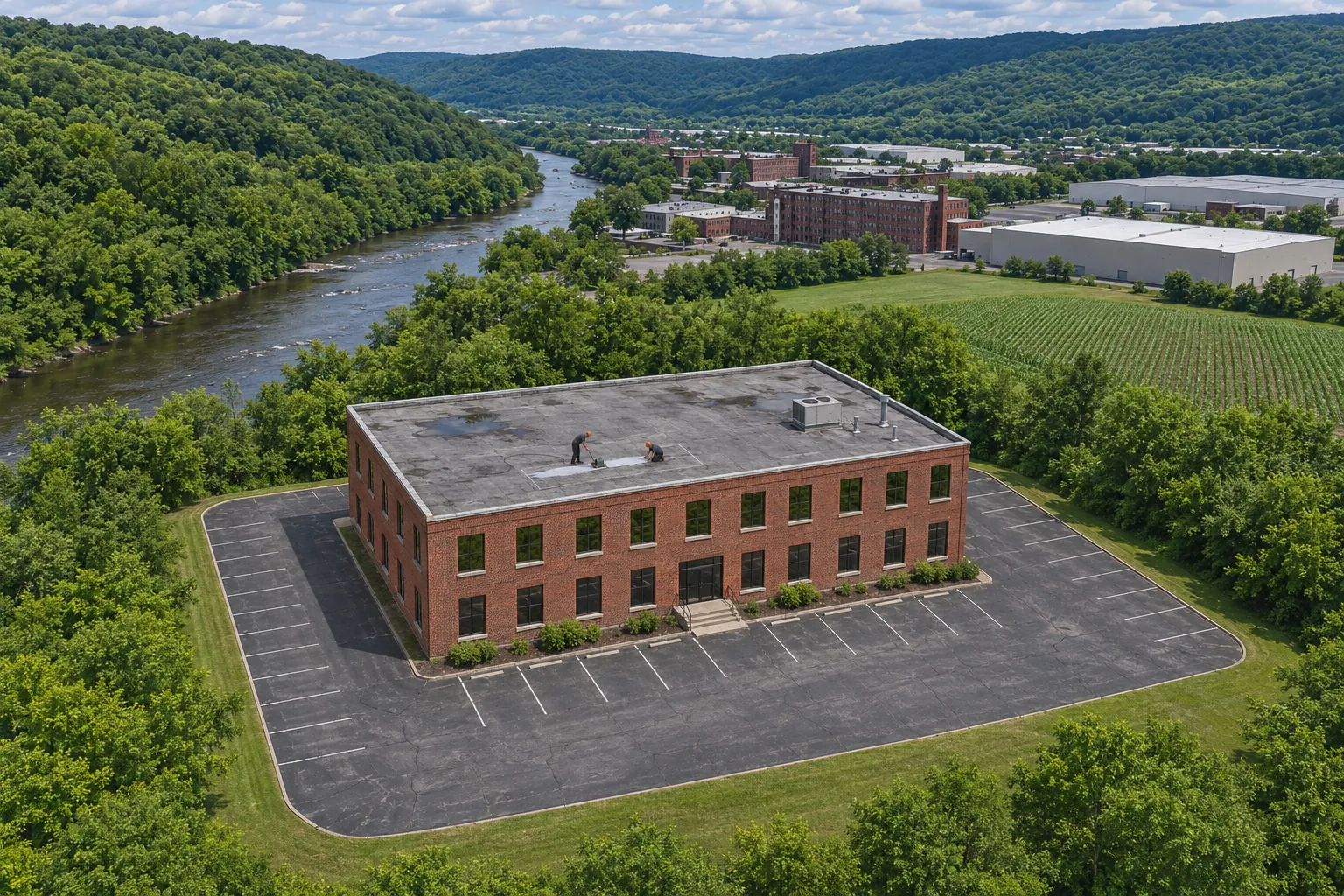
Two roofers working on the flat roof of a two-story brick office building above a river valley in Scranton, PA
Lackawanna County Roofs

Scranton Commercial Roof Repair Contractor

Repairs For Brick Mills, Warehouses, Retail Centers, And Plants

As a Scranton commercial roof repair contractor, we trace leaks on the roof, fix seams, drains, flashing, and panels, and keep repairs tied into dry roofing.

  • First StepAn On-Roof Inspection
  • Moisture CheckCore Cuts Where Needed
  • You ReceiveA Marked Repair Map
  • CoverageScranton Plus Five Towns
Roof Conditions

Roof Problems Behind Commercial Repair Calls in Scranton

Scranton commercial roof repair usually starts with one of four conditions: hail, a storm leak into occupied space, ice at the edges, or seams worn past patching.

  • Hail

    Hail Damage Commercial Roof Repair

    You See

    Bruised membrane, split laps, and dented metal show up after a summer storm rolls through the valley.

    What It Means

    Punctures and opened seams let water in long before a dent does. We check function against the roof’s earlier condition and write the repair around real defects.

  • Storm

    Emergency Commercial Roof Repair

    You See

    Water drips onto shelves, a sales floor, or a production line during a hard downpour.

    What It Means

    Temporary containment protects people and stock first. A lasting repair follows once the entry path is traced on the roof and wet materials are measured.

  • Freeze

    Ice At Drains And Roof Edges

    You See

    Meltwater backs up behind ice at gutters, scuppers, and drain bowls in late winter.

    What It Means

    Held water reaches seams and flashing that ordinary rain never touches. Drains and edges get checked once footing on the roof is safe.

  • Age

    Worn Seams And Stacked Patches

    You See

    Brittle membrane at the perimeter, loose edge metal, and patch layers piled on older patches.

    What It Means

    Several small entry points add up to repeat calls. Core cuts show whether the insulation is dry enough to keep repairing or whether a section needs replacing.

Repair Or Replace

Scranton Commercial Roof Repair Or Section Replacement

Most leaks start with a targeted repair. These columns show the roof conditions that move a job toward replacing one section or the whole roof.

Where Most Repairs Start

Targeted Repair

Starting Point
One traced leak or a few defects
Area Opened
A seam, curb, drain, or panel area
Insulation
Dry past the patch edge
Work Above Tenants
Short visits with small openings
Common Trigger
A single stain after rain

Section Replacement

Starting Point
Wet insulation across one bay
Area Opened
Cut back to dry, firm roofing
Insulation
Wet boards removed and replaced
Work Above Tenants
Planned around one zone at a time
Common Trigger
Core cuts showing trapped water

Full Replacement

Starting Point
Wet or brittle roofing nearly everywhere
Area Opened
The whole roof down to the deck
Insulation
Replaced across the building
Work Above Tenants
Phased by roof area
Common Trigger
Repeat leaks with few dry areas left
Repair Services

Commercial Roof Repair Work in Scranton

Four repair services cover the roofs we see most: low-slope membrane, metal panels, leaks that need tracing, and plant roofs crowded with equipment.

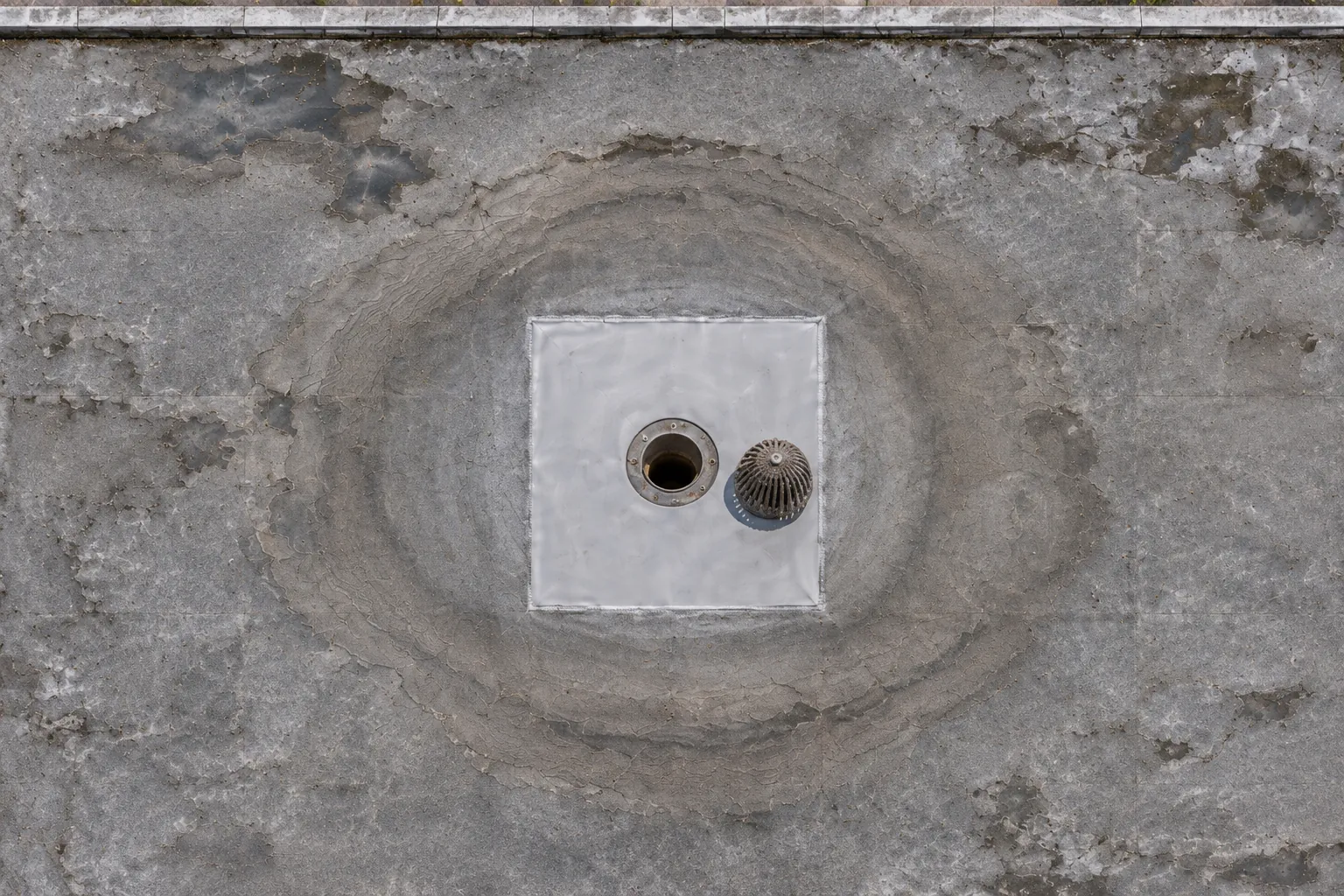
Top-down view of a new white membrane square flashed around a roof drain inside old ponding rings

Flat Roof Repair

Membrane, built-up, and modified bitumen roofs on Scranton offices, mills, and warehouses. We fix split seams, blisters, and ponded drains, then tie each patch into dry roofing around it.

Where Water Gets In
  • Low spots holding water around drains
  • Seams split by freeze and thaw
  • Blisters lifting over damp insulation
See flat roof repair
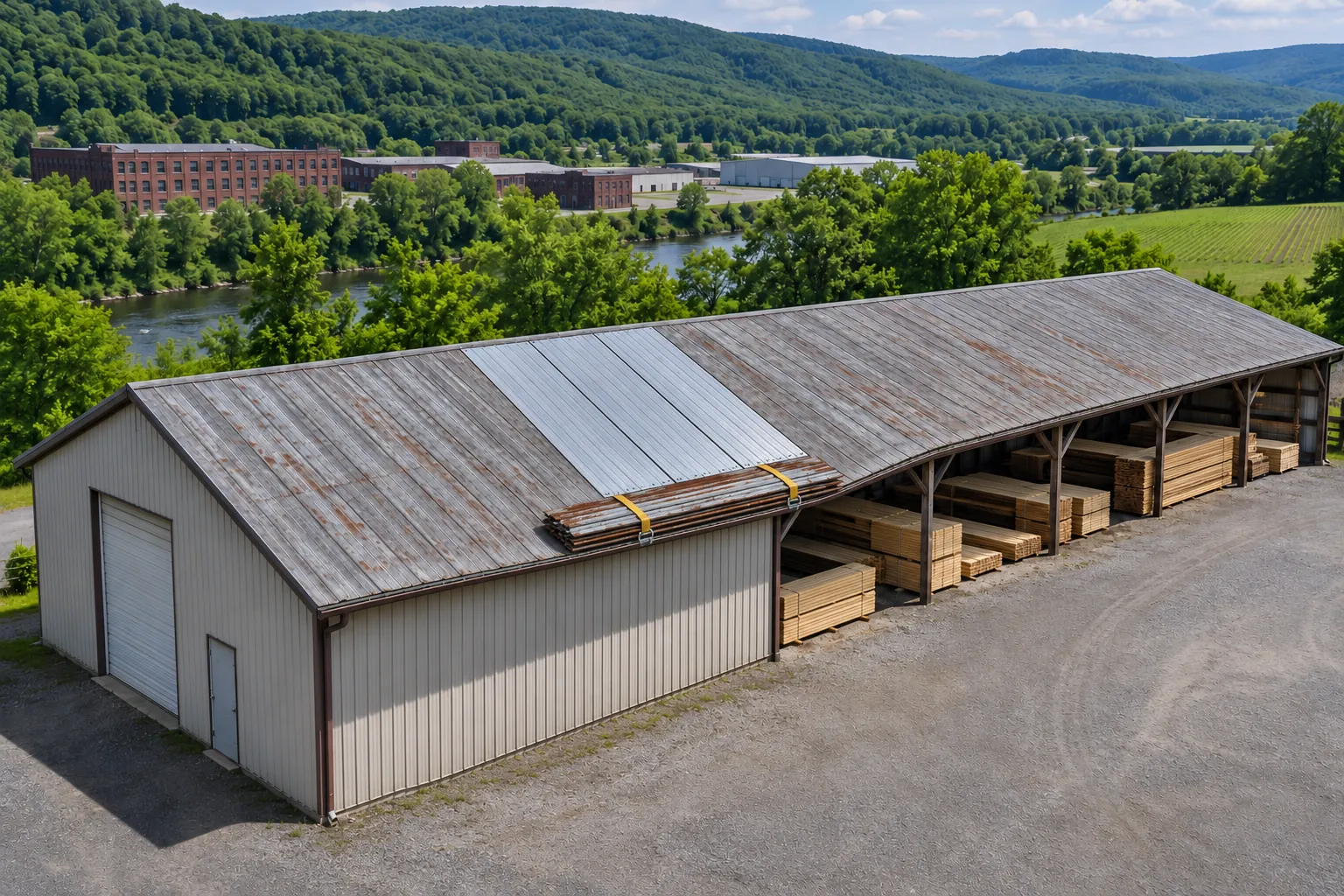
Metal storage building with a run of new bright panels set into a weathered metal roof

Commercial Metal Roof Repair

Exposed-fastener and standing-seam roofs on shops, barns, and storage buildings. Panels get swapped, laps resealed, and every screw near the damage checked for grip.

Where Water Gets In
  • Screws with split or missing washers
  • Corrosion hidden under panel laps
  • Pipe boots cracked at the flange
See metal roof repair
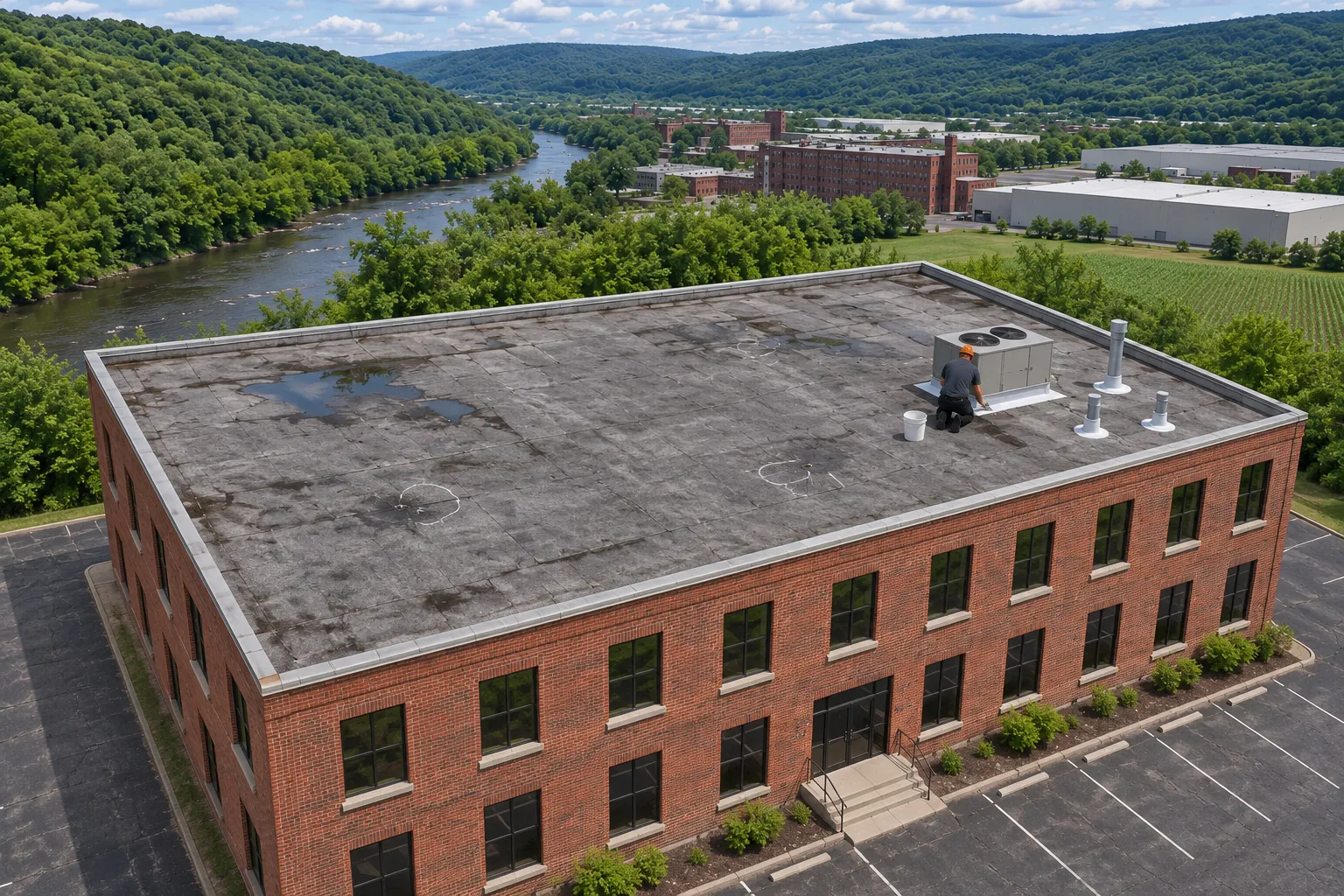
Roofer kneeling at a rooftop unit on a brick building, with marked points around the roof penetrations

Commercial Roof Leak Repair

Leaks whose source is far from the stain. We trace water from the ceiling back across the roof to coping joints, drains, penetrations, or wall connections, then repair the entry.

Where Water Gets In
  • Coping joints above the wall flashing
  • Edges and gutters blocked by ice
  • Flashing at rooftop unit curbs
See leak repair
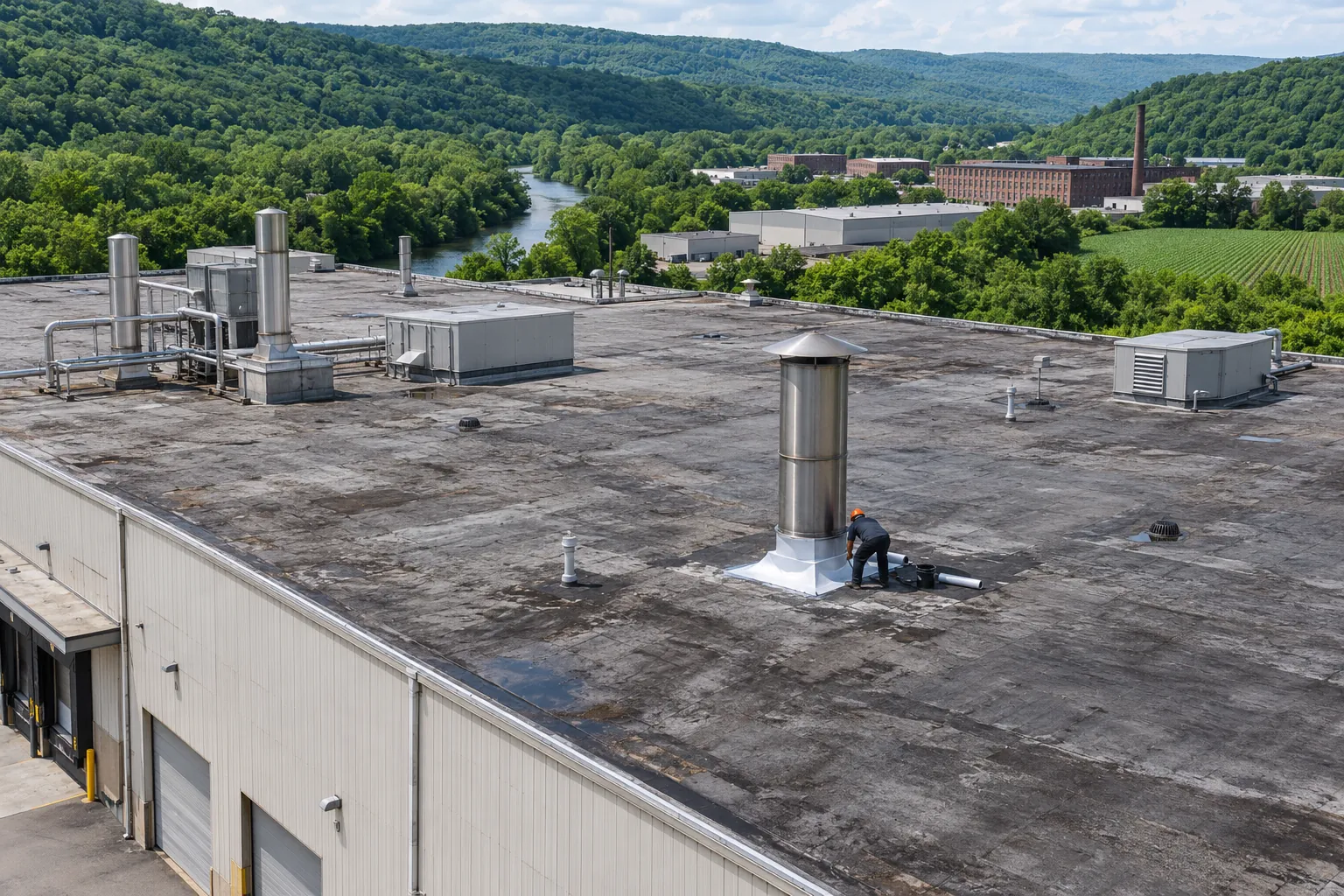
Roofer sealing fresh flashing at the base of an exhaust stack on a large industrial roof

Industrial Roof Repair

Plant and warehouse roofs with drains over machinery, exhaust fans, and stacks. Work is staged so roof openings stay clear of active workstations below.

Where Water Gets In
  • Fan curbs loosened by vibration
  • Drain outlets above production lines
  • Stack collars near hot exhaust
See industrial roof repair

Water Coming Through The Ceiling Now?

Move people and stock away from the drip, note when it started, and call us. Containment comes first, then the source gets traced on the roof.

How A Repair Runs

Scranton Roof Repair Steps For Commercial Buildings

Each repair follows the same five steps, from the first call about a stain to a marked map of the finished work.

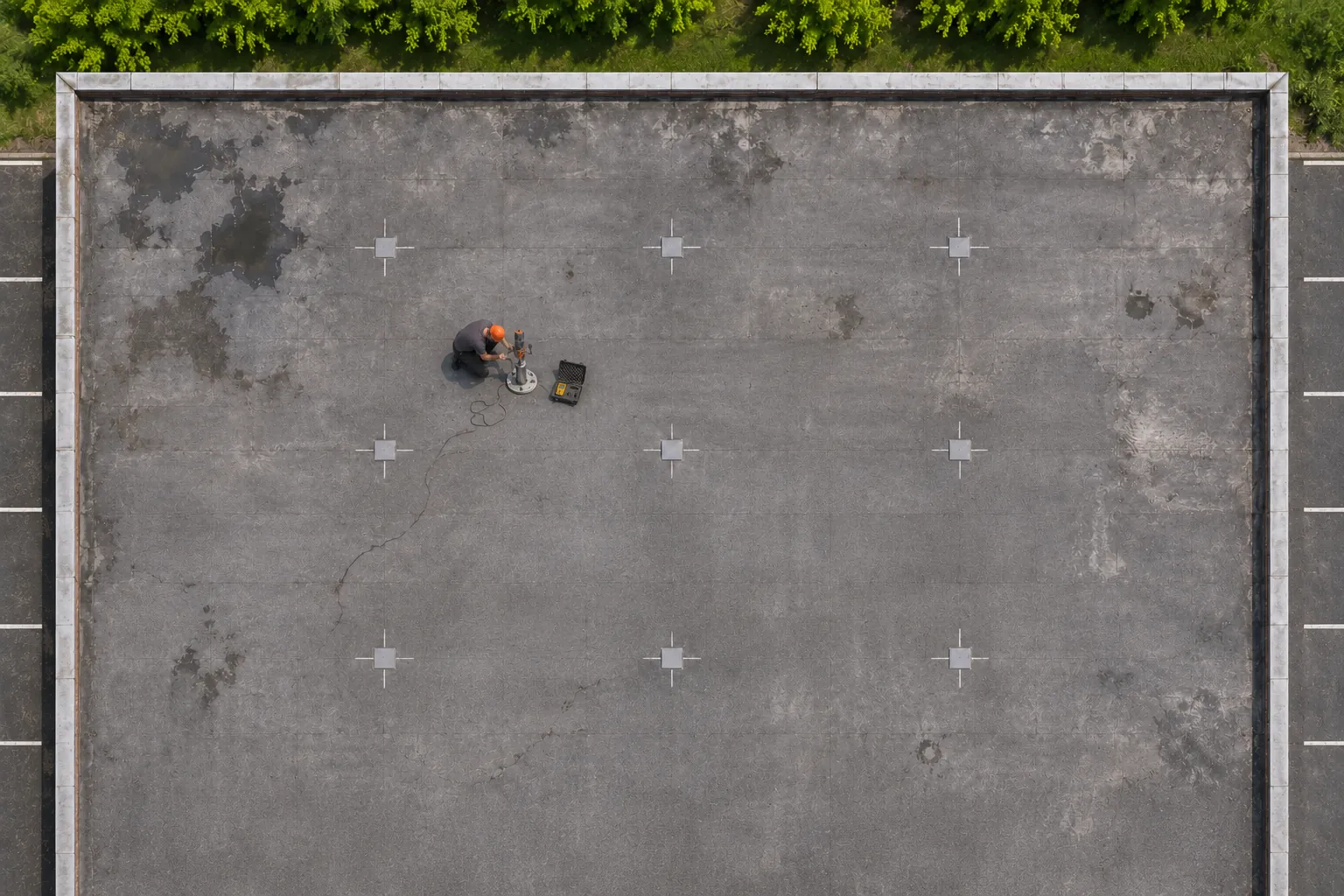
Top-down view of a flat roof marked with a core-cut grid and a roofer taking a core sample
  1. 1

    Talk Through The Leak

    Tell us where water shows up, when it started, and what runs on the roof above it, such as rooftop units or exhaust fans.

  2. 2

    Walk And Trace The Roof

    Seams, drains, curbs, parapet caps, and penetrations near the stain get checked, because water often travels before it drips.

  3. 3

    Cut Cores Where Needed

    Small core samples show whether insulation under the membrane is wet and how far the damage reaches across the deck.

  4. 4

    Repair To Dry Edges

    New membrane, flashing, or panels tie into firm, dry roofing beyond the defect, sequenced around your building’s hours.

  5. 5

    Hand Over A Repair Map

    Notes and photos mark what was fixed, any wet areas left in place, and roof details worth watching after the next storm.

What Repair Gains

What Commercial Roof Repair Fixes on Scranton Buildings

Each repair answers a specific failure. These four come up on most roofs in the city, from brick mills to newer warehouses.

  • What Fails

    Open Seams And Laps

    Heat, cold, and foot traffic pull membrane laps apart until rain runs under them.

    What The Repair Does

    We clean, prime, and weld or adhere new cover strips that tie into firm membrane on both sides.

  • What Fails

    Clogged Or Loose Drains

    Debris and a sagging drain bowl hold water where seams and flashing sit wet for days.

    What The Repair Does

    Strainers are cleared, the clamping ring is reset, and new target flashing goes around the bowl.

  • What Fails

    Cracked Curb Flashing

    Rooftop units shake and shift, cracking the flashing at their curbs and letting water run down the sides.

    What The Repair Does

    Curb flashing is rebuilt to full height, and any leak from the unit itself is flagged for the HVAC trade.

  • What Fails

    Coping And Parapet Gaps

    Open coping joints let water drop behind wall flashing on older brick buildings.

    What The Repair Does

    Coping caps are reattached and sealed, and wall flashing gets new terminations where it pulled away.

Service Area

Serving Scranton And Five Nearby Towns

Brick mills, distribution warehouses, retail centers, and plants in these towns are where we repair roofs most. Elsewhere? Call us or send us a message.

Questions

Questions About Scranton Commercial Roof Repair

Short answers to what owners and facility managers ask first. The full list lives on the FAQ page.

Asked Most

What Sets Commercial Roof Repair Cost?

The roof itself sets the price, so we quote after an inspection on the roof. Leak tracing time, the roof system, how many damaged areas there are, and how large each one is all count.

Wet insulation found in core cuts, flashing and drain work, and access to the roof change the total, and they also show whether a section should be replaced.

How is hail damage on a commercial roof checked?

Hail is judged by function: punctures, opened seams, and loosened flashing. Dents alone tell little about water entry. We compare the roof with its earlier condition and note any wind damage from the same storm. The written scope lists real defects, and insurance coverage still depends on your policy and the cause of loss.

Who pays for roof repairs on a leased building?

The lease decides it, through its repair, maintenance, and notice terms. We document the defect and the proposed work so owner and tenant can read their obligations against it. Meanwhile, access and protection of the affected rooms still get arranged, because ownership or occupancy alone rarely settles who pays.

Can humidity in an old brick building look like a roof leak?

Yes. Condensation inside older masonry buildings can wet ceilings much like a leak. We compare the dampness with weather and building use, then check insulation, panel undersides, and roof-to-wall joints. A patch fixes a confirmed roof defect; moisture forming inside the assembly calls for a ventilation or enclosure fix instead.

When does a repair turn into a replacement?

Replacement comes up when wet materials spread wide or the roof is too deteriorated to hold a dependable repair joint. We compare the repair area against the rest of the assembly before widening the scope, so the decision rests on what the roof shows today and the size of the latest stain plays no part.

Hire a Scranton Commercial Roof Repair Contractor

Tell us where the water shows up and what sits on the roof above it. We inspect first, then quote the repair.

Call Us (570) 918-5770